Are you interested in conducting polling place accessibility survey? If so, do you know where you want to survey and if you are interested in teaming up with other members?
We are most focused on the November 3 election, but early voting sites are also required to be accessible. Evaluations of early voting sites is also useful!
The Arc of Massachusetts Government Affairs Team and Brianna Zimmerman, Voting Rights Advocate at the Disability Law Center (DLC) and REV UP MA, held an informative webinar on September 17 to help prepare you for the 2026 Statewide Election happening this November.
Topics covered include:
The rights of Massachusetts voters with disabilities and who can vote;
How to register to vote;
How to vote and accommodations available to voters with disabilities; and
What we are voting for in November’s General Election, including an explanation of the ballot questions
This is a practical, informative opportunity to know your voting rights and some of the issues that will be covered in the November state election!
Brianna Zimmerman (she/her/hers) is the Voting Rights Advocate at the Disability Law Center (DLC). DLC is a statewide nonprofit legal services organization and the Protection and Advocacy (P & A) agency for Massachusetts. Under the Protection and Advocacy for Voting Access (PAVA) program, Brianna conducts voter registration drives, voting rights trainings, and ensures that voting is accessible to disabilities. Brianna also helps coordinate the REV UP MA coalition, a group of organizations and self-advocates that are passionate about civic engagement and voting access.
Join us on Tuesday, March 24 from 1PM – 3 PM ET. ASL and CART are provided. Register for the REV Up national callto deepen your knowledge, build solidarity, and strengthen our collective power at the intersection of disability voting rights and immigrant justice.
This national training will educate REV UP organizers on:
Immigrant voter rights
How the REV UP movement can build deeper cross-movement solidarity with immigrant justice efforts
Best practices to safely engage and register immigrant voters with disabilities in their communities
What it means to safely participate in this work as an immigrant organizer, including practical considerations and risk awareness
Learn from our guest speakers:
Angelica Razo, National Director of Campaigns & Programs at Mi Familia en Acción Angelica ‘Angie’ Razo is the National Director of Campaigns and Programs for Mi Familia Vota. She is the proud daughter of immigrants from Mexico and was raised in a mixed-status household. Angelica has always been passionate about contributing to advocacy and engagement efforts that lead to sustainable and equitable solutions for her community. She is most interested in issues regarding access to democracy, gender equity, and climate justice. Angelica joined Mi Familia Vota in 2017. Previous to her current role, she served as the Texas State Director where she managed the state’s operations to increase political representation and power for the Latino community through electoral, advocacy, and community organizing strategies. Her strong belief in community empowerment motivates her to engage others so they can find their own unique civic role while participating in collective action.
Jesús Ramón Villalba Gastélum, Senior Statewide Organizer, Integrated Voter Engagement (IVE) at the CA Immigrant Policy Center Jesús Ramón is a proud immigrant from the city of Culiacán, Sinaloa in México. A member of the undocumented community, he began organizing under the first Trump Administration while in High School, worried about his family’s safety. Jesús Ramón’s first experience with electoral work was in 2019, calling voters as part of CHIRLA and CHIRLA Action Fund’s involvement in promoting Measure EE in that year’s Special Elections.
Bridget has emailed survey questions to fair attendees. She is asking that feedback be sent to her at bridget.murphy@sec.state.ma.us. Here are the questions:
Which vendor fair did you attend?
What brought you to the vendor fair?
How did you hear about us?
Have you used accessible election equipment prior attending the 2026 vendor fair?
After reviewing the options at the fair, which equipment did you like best and why?
Which equipment did you least like and why?
Any additional comments?
Please also send your responses to info@revupma.org, if you don’t mind us sharing them.
General Info
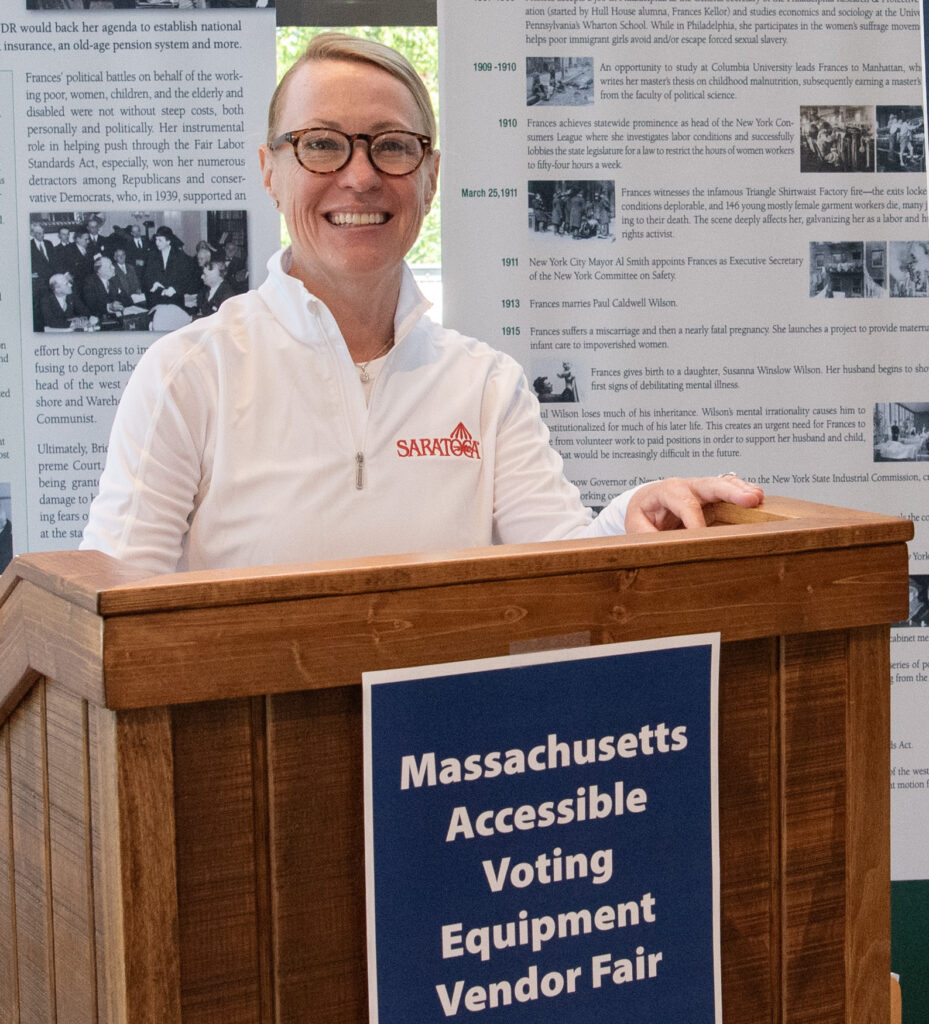
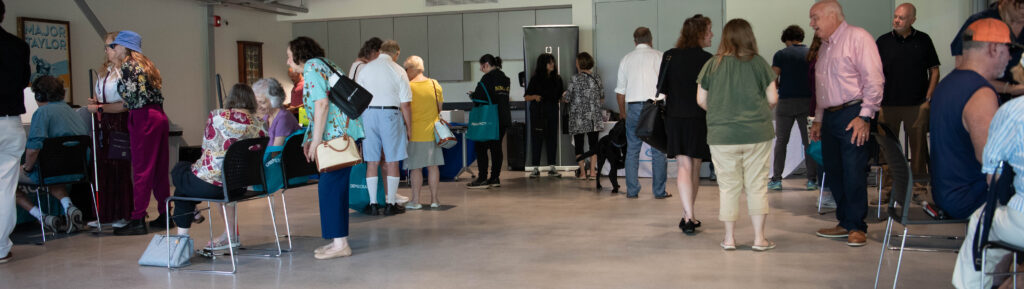
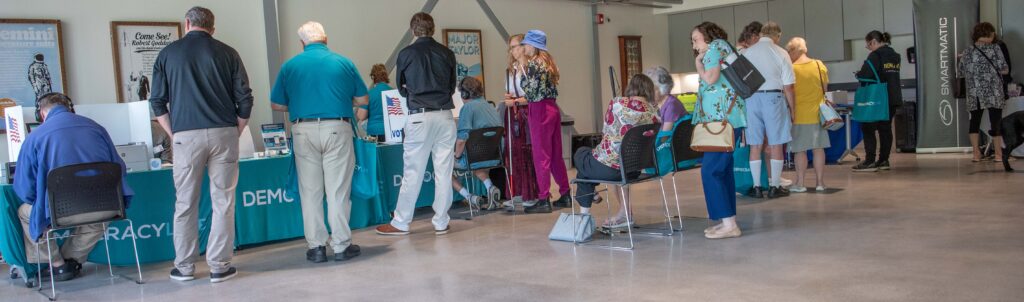
Bridget Simmons Murphy of the Elections Division of the MA Office of the Secretary of State hosted Accessible Voting Equipment Vendor Fairs in five locations (Middleton, Northampton, Brockton, Watertown and Worcester) the week of August 10.
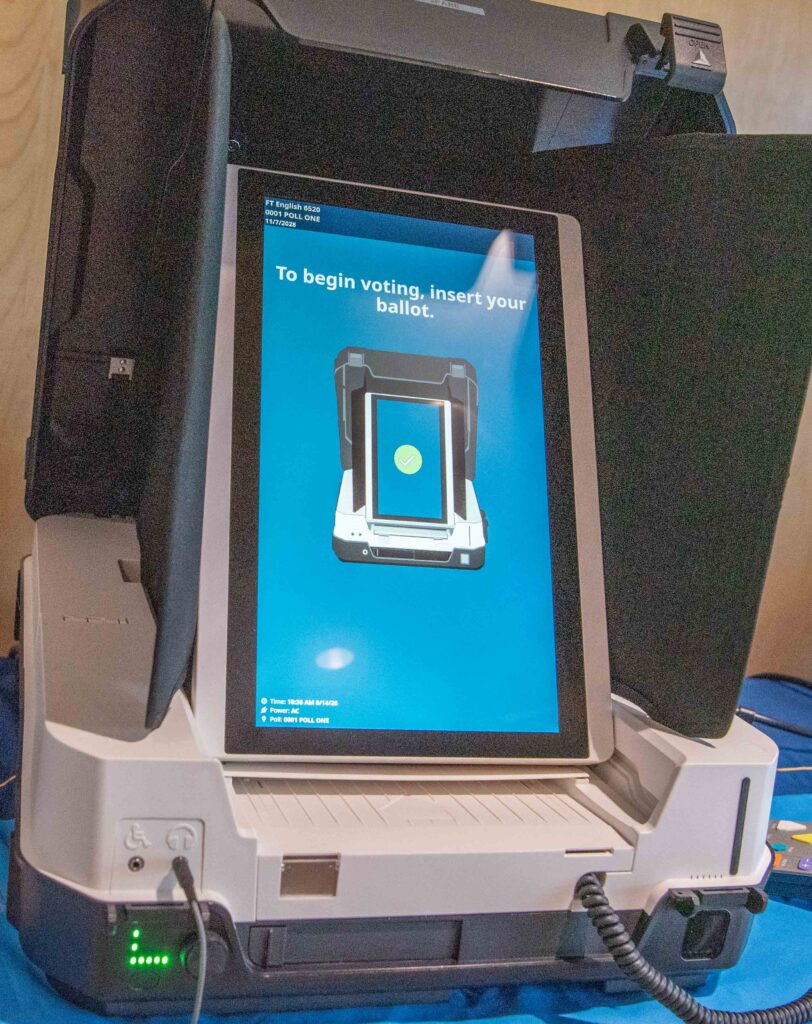
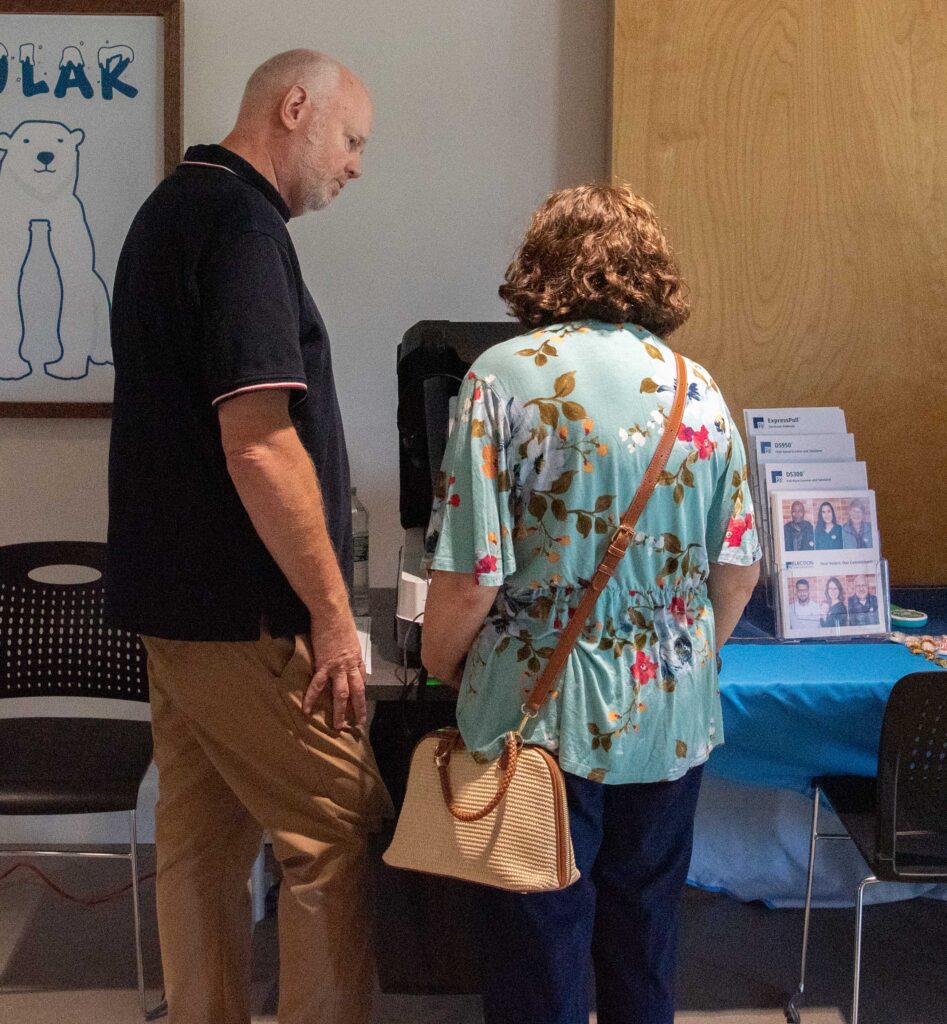
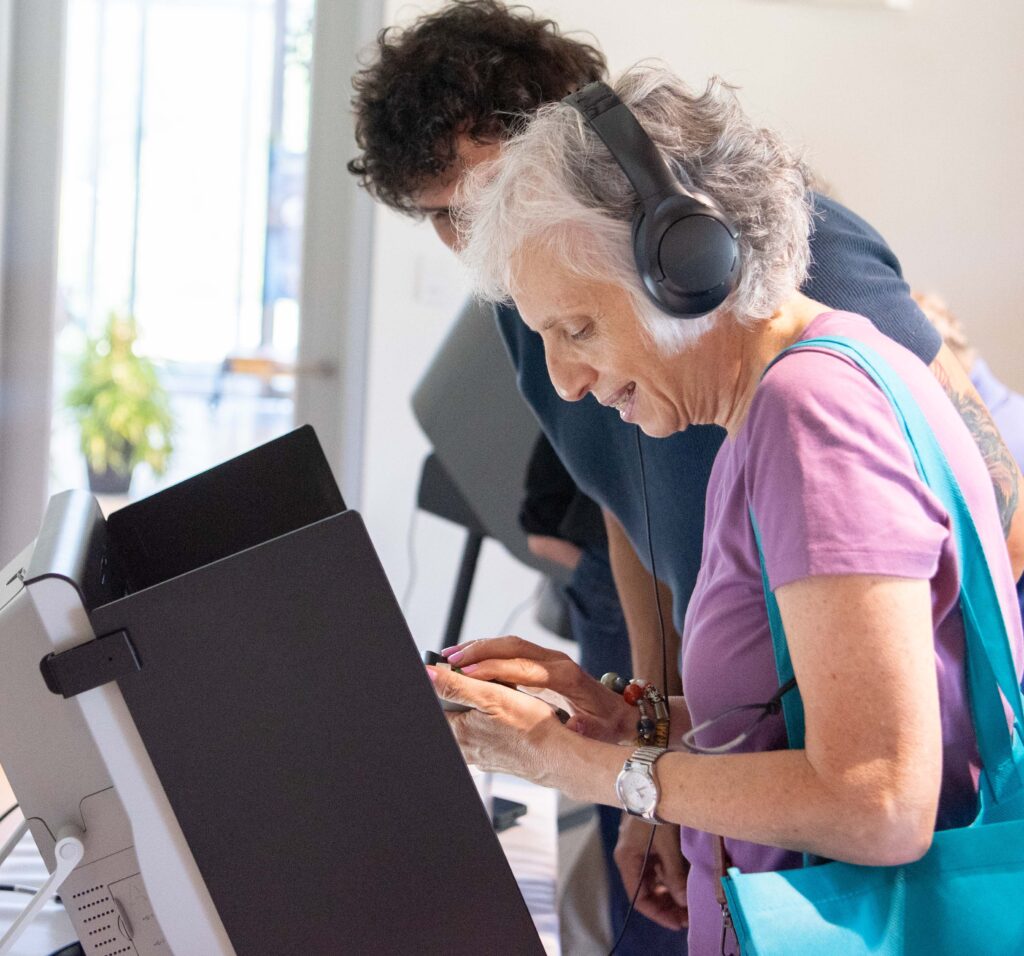
The fairs were opportunity for voters with disabilities, advocates and town clerks to review, test, and provide feedback on the accessible voting equipment that will eventually replace Massachusetts’ accessible voting machines, the AutoMARK.
The state also plans to have some new machines at various election sites in November so that more voters can try them out. They will not replace the official AutoMARK for actual voting. Stay tuned for these locations if you missed the fairs!
The current AutoMARK machines have been in use since they were bought with HAVA funds in 2006. While the version in use in MA is no longer supported by Elections Systems and Software (ESS), we were assured by Bridget that the state has hundreds of backup machines and parts which are deployed to key locations throughout the state for quick responses to issues on election day.
Attendees will be asked for feedback through emailed surveys.
Bridget is planning a collaborative process with stakeholders to choose the next machines. Attendees will be asked for feedback through emailed surveys. The ELections Division has a goal of new machines being in place for the fall of 2028 elections.
Bridget Murphy
Please note: We are including different opinions, observations and view points about the different machines, but at this time, REV UP MA does not prefer one vendor over another.
Eleven vendors were invited by the state to showcase their systems, but only four chose to participate.
The HAVA grants may no longer be available, so funding sources will need to be determined. Machines are priced in the $5000 – $8000 range, and the state has 1,725 polling sites.
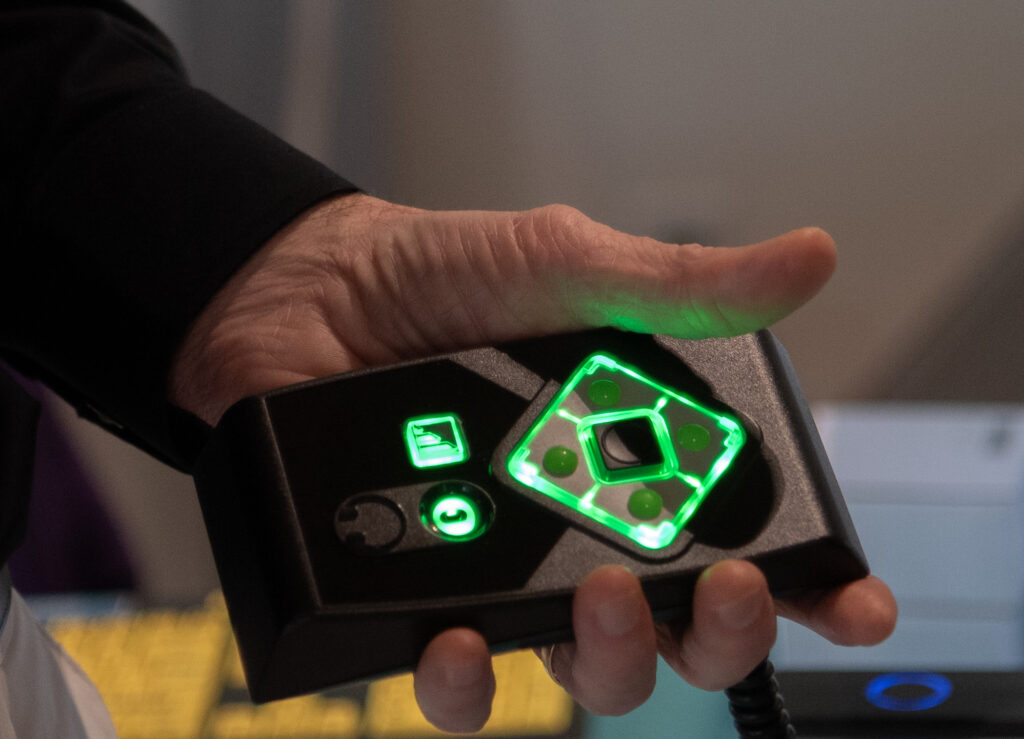
ESS has a new version of the AutoMARK machine used today in Massachusetts. Some key features include a handheld keypad with Braille, and the use of actual ballots. Because the ballots are simply marked and not printed, the ink should last for many years. ESS is the only single machine – the 3 other vendors use an attached printer.
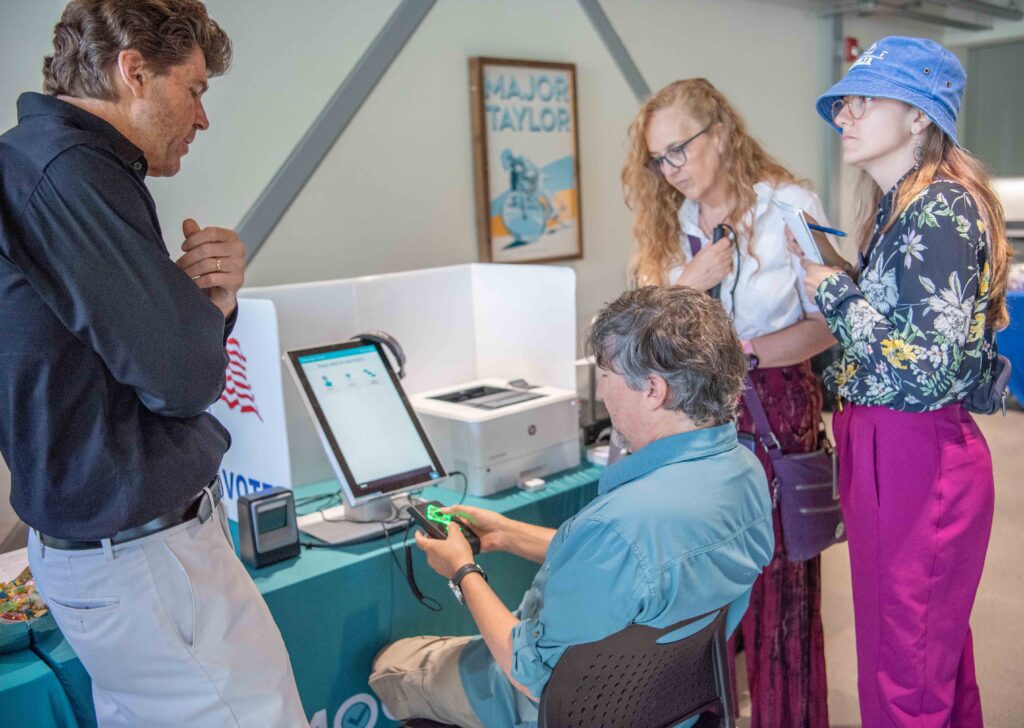
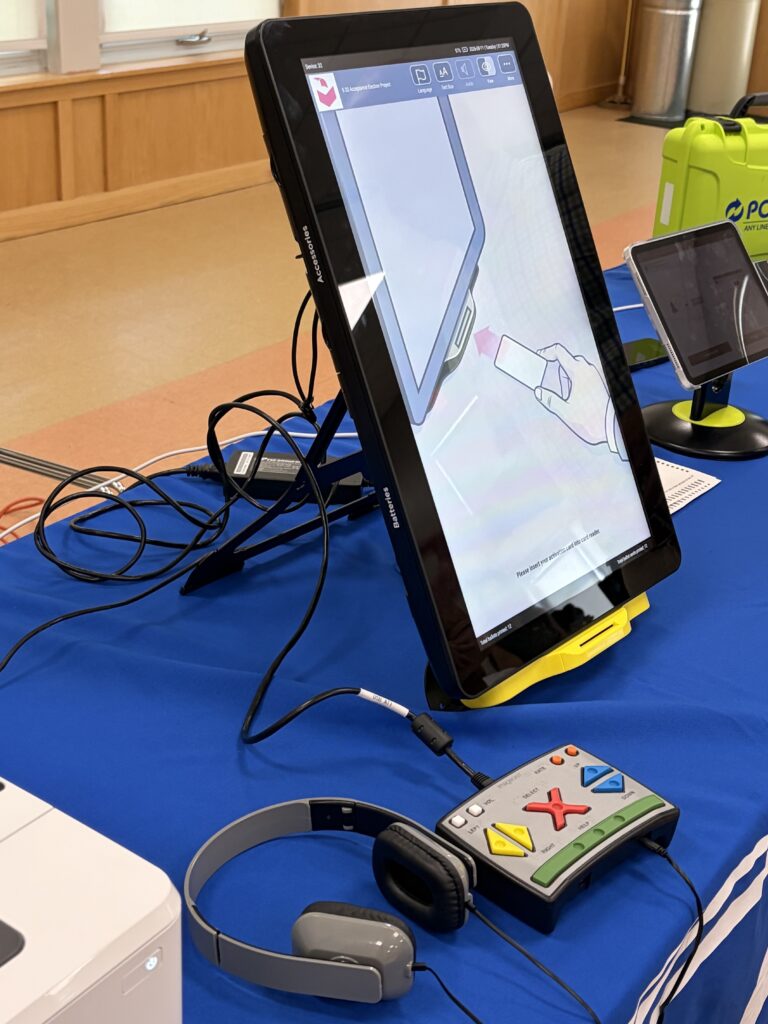
The product is the OMNIBALLOT tablet. MA uses Democracy Live for accessible vote by mail. There is no braille on the keypad, but the keys are fewer and simpler than other vendors. The ballot is printed using an attached printer. Voters use a QR code from a poll worker in order to pull up the correct ballot.
With ImageCast, the ballot printed on separate printer and not fed in. Voters are given a unique activation card for their ballot which they insert into the machine to load the ballot. This card is returned when casting ballot. The Dominion keypad has Braille and is different from other systems.
The ballot is printed on a separate printer, and not fed in. More info soon
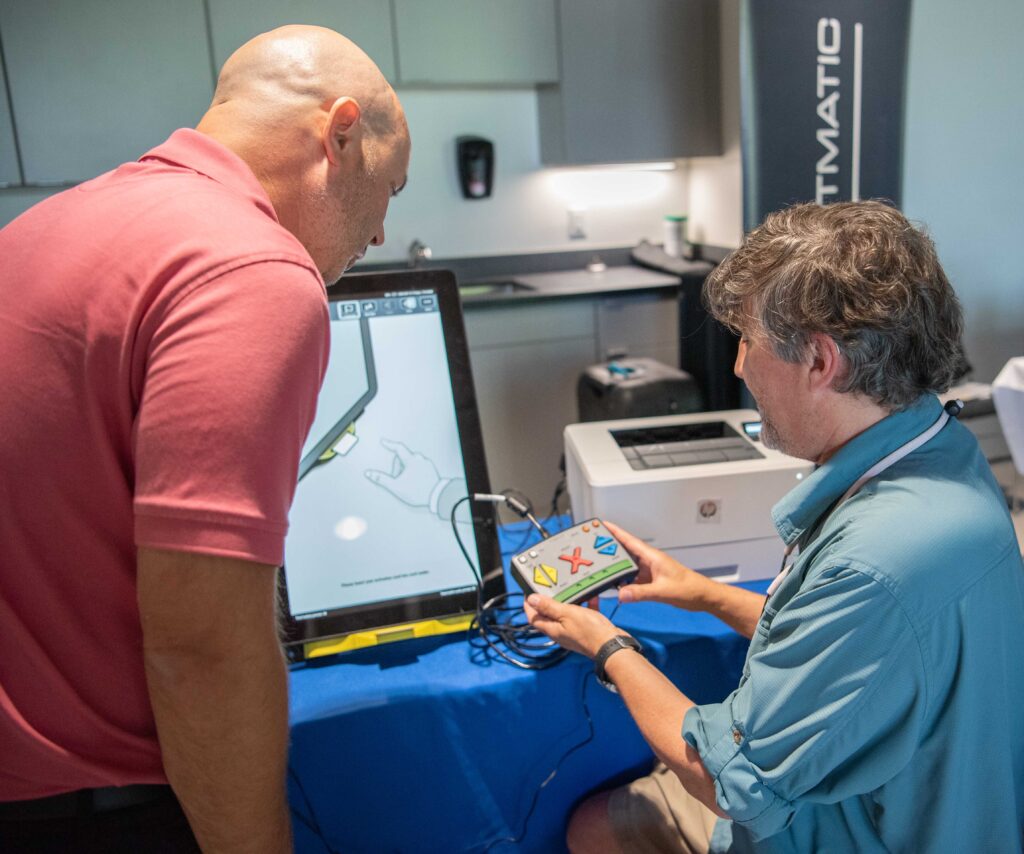
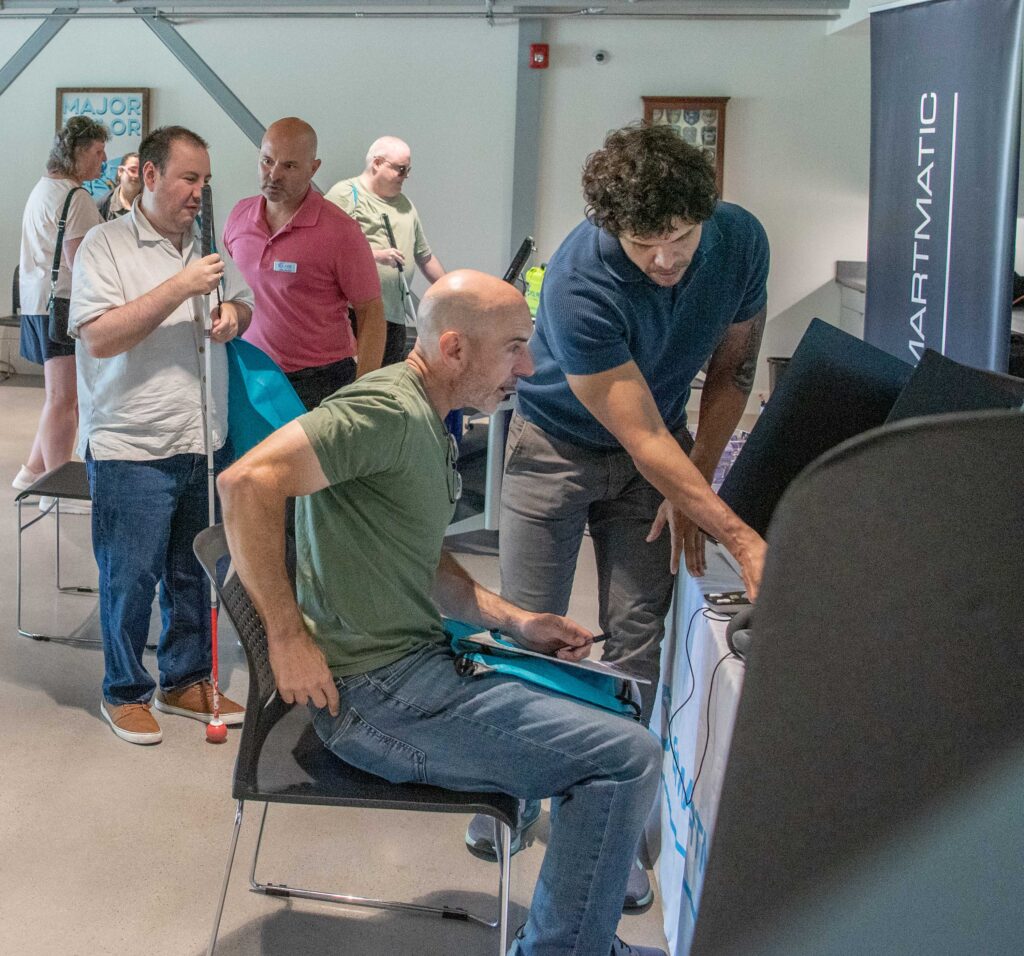
Tom Murphy from DLC tries out the Smartmatic machine
Going Forward
Attendees will be asked for feedback through emailed surveys.
Bridget is planning a collaborative process with stakeholders to choose the next machines. Attendees will be asked for feedback through emailed surveys. The ELections Division has a goal of new machines being in place for the fall of 2028 elections.
REV UP MA would like to see more fairs in more locations across the state with an emphasis on feedback from voters who use accessible machines. While advocate and town clerk feedback is critical, the voters with disabilities are the most important.
All who are interested in empowering the disability vote and making sure voting is accessible across MA are welcome to join our 2026 REV UP MA coalition meetings! Sign up for REV UP MA Emails, and get the information so you can attend.
If you have any access needs, please let us know on the Zoom registration form.
Plans for Disability Voting Rights Week (September 14 – 18)
Voter Registration Drives: Updates from Members; Sign Up to Hold a Registration Drive
Polling Place Accessibility Surveys: Sign Up to Survey Polling Places
Debrief on Accessible Voting Equipment Fairs
2026 July 23 Meeting
Agenda:
Brief Introductions (if new members)
How to Register Voters & Helpful Tips
Discussion: What kinds of support will coalition members need to hold voter registration events?
Upcoming Voter Registration Opportunities
Action Items
2026 MA Coalition Meetings
June 18 Slides (pptx) and June 18 Slides (pdf). In addition to sharing upcoming events, we learned about efforts to replace the aging AutoMark machines and opportunities for doing your own voter registration drives.
2026 Webinar
2026 REV Up MA Webinar May 14: Topics included Voter Registration, Accessible Remote Voting at Home and In Facilities, Accessible In-Person Voting and the need for volunteers to Survey Polling Sites at this fall’s elections.
The recording and webinar materials are now available from the May 14 event. Some of the topics covered included Voter Registration, Accessible Remote Voting at Home and In Facilities, and Accessible In-Person Voting. They also discussed the need for volunteers to do the upcoming Polling Site Surveys at this falls elections.
On Friday, December 26, 2025, our movement lost a powerful leader, and many of us lost a dear colleague and friend. Bob Kafka, a longtime organizer with the disability civil rights protest group, ADAPT, the founder of AAPD’s REV UP campaign, and a co-lead of REV UP Texas, passed away at his home in Austin, Texas.
Bob was driven by the conviction that disabled people deserve freedom, choice, dignity, and power. His ideals were not just dreams; they were a mandate, a directive that guided how he lived his life. He carried his conviction with a steady, patient, laid-back confidence. He believed there was always work to be done, but he also believed in making time for banter and jokes, time to educate and mentor people new to the movement.
Bob was a unique and dynamic leader in that he didn’t play just one role in the disability rights movement – he played them all. He understood the value of different tactics and the power of community.
He put his body on the line for justice – Bob was arrested over 30 times as part of his many fights to pass landmark pieces of legislation and to protect and establish critical programs. The legislative causes for which he put his body on the line were often eventually successful, resulting in lifts on buses and increased funding and incentives for home-and community-based services (HCBS).
Bob Kafka at 2015 Rev Up MA Conference
Bob’s unruly white curls (usually tucked beneath a hat) and wild beard can be spotted in the photos of the crowds at many pivotal disability protests that helped propel public awareness and progress on key issues. He could lead a chant and rally a crowd – “Our homes, not nursing homes!” – and then moments later lower his voice, lean back in his manual wheelchair and, with patience and tact, have a diplomatic debate with elected officials and political appointees over the nuances of federal funding, state-led programs, and managed care.
Bob attended his first ADAPT training in 1984 and remained a student of advocacy until the end of his life. He interviewed hundreds of disabled leaders on his KSFR 101.1 Santa Fe radio show, Barrier Free Futures. While many of his guests tried to turn the script and interview the movement giant on the other side of the mic, Bob was a curious and thoughtful host. He knew that listening was an important part of leading.
“Bob was brilliant. There was no disability policy issue I couldn’t ask him about. Part of that was that he read a lot, but part of it was he made it a point to get to know people, ask them questions, and listen to them,” said Lydia Nuñez Landry, a leader of REV UP Texas, who advocated alongside Bob.
No task was below Bob, and no win was too small. He recognized equal and necessary value in freeing one person from a nursing home and in working toward systemic change. He enjoyed meeting with legislators as much as he enjoyed organizing community parties all around Texas for Disability Voting Rights Week.
“Bob hardly ever talked about himself, in a lot of ways he was really selfless. The last action we went to together, his chair was falling apart, held together with tape and zip ties. The money he received was all going toward the cause. That’s something I really respected and admired,” Nuñez Landry shared.
Bob recognized the importance of honoring and growing disabled people’s civic power, and fostered this passion by founding REV UP Texas. Ten years ago, we were honored when Bob asked AAPD to take the movement he started to the national level by establishing and managing disability vote coalitions in many more states. REV UP is an acronym, of course, but also a call to action: Register, Educate, Vote, Use your Power! It is national in scope, recognizing that broad change is needed to move the needle, but it is driven by local, grassroots advocacy, with coalitions in over 20 states and engagement across 48 states.
Bob understood that voting is a singular, individual action that connects people to larger movements. For this reason, REV UP recognizes that every person has a role to play in creating change and that all disabled people have immense power. It asserts that we belong in political conversations and we deserve to be seen, heard, and respected. Most importantly, REV UP recognizes that the disability vote is formidable with the power to shape and change the course of our nation’s history with 40.2 million disabled voters in the U.S. and over 70 million when you count caregivers and family members.
Despite having witnessed both tremendous policy gains and heartbreaking setbacks over his lifetime in activism, Bob was relentless in his belief in a better future and putting in the work to get us there.
“To be an organizer, you have to believe that change is possible, but you also have to be pragmatic and realistic. You have to be specific about what policy changes you want, and Bob was great at that,” Nuñez Landry said. “I never saw him despair or give up. He always would tell me when I would get down, in his Brooklyn accent, ‘You can’t motivate people with despair and hopelessness, Lydia. You have to make them believe change is possible and can be done.'”
Bob was famous for ending every email and phone call with his relentless refrain for justice, “Don’t mourn, organize.” Every setback in the long arc to justice, every loss of a disability hero and community member, is part of our story.
In the spirit of Bob’s mantra, we will not dwell in our grief but use it to fuel our commitment to disability organizing, dignity, and power. You can stay engaged with REV UP by joining our listserv or attending state and national calls. If you’re interested in starting a coalition or getting further engaged, email revup@aapd.com.
Thank you, Bob. We won’t let you down.
NCIL Statement on the Passing of Bob Kafka
The National Council on Independent Living (NCIL) mourns the passing of Bob Kafka, a powerful advocate and movement leader whose life and work helped shape the fight for independent living, disability justice, and community inclusion.
Bob believed deeply that disabled people belong in their homes, their communities, and at decision-making tables. His advocacy was grounded in action, persistence, and a clear understanding that rights are never simply granted; they are demanded, defended, and protected over time. His work reflected the core values of the Independent Living movement: dignity, access, self-determination, and collective power.
Bob’s leadership was widely recognized, including his receipt of NCIL’s Max Starkloff Lifetime Achievement Award, one of the movement’s highest honors. He joins a distinguished group of recipients who have fundamentally shaped disability rights, including Lex Frieden, Stephanie Thomas, and the ADAPT community. This recognition was not symbolic, it reflected Bob’s real and lasting impact on policy, people, and the direction of our movement.
Beyond titles or awards, Bob was someone who showed up. He spoke plainly, pushed hard when it mattered, and stayed engaged even when the work was uncomfortable or exhausting. Our movement is stronger because of leaders like Bob who refused to settle for partial inclusion or temporary wins.
As NCIL Executive Director Theo W. Braddy shared:
“With the recent loss of other prominent disabled leaders and voices in our movement, Bob’s passing leaves another giant void, one felt deeply not only within the disability community, but across society as a whole. Leaders like Bob remind us how much progress has been driven by disabled leaders who refused to be silent and who demanded better, not just for themselves, but for generations to come. His absence will be felt, and his legacy will continue to guide us“.
We extend our deepest condolences to Bob’s family, friends, colleagues, and the many advocates who learned from him, worked beside him, and were inspired by his leadership. NCIL honors Bob Kafka’s legacy and recommits itself to carrying forward the work he believed in so fiercely. His voice will be missed. His impact will not be forgotten.
Registration is required. CART and ASL will be provided.
At this meeting, we will be reflecting on the last year of voting advocacy work, sharing some recent advocacy updates, and developing some goals for our year ahead. Check out the agenda (below) for more details.
REV UP MA End-of-Year Meeting Agenda
Thursday, December 4th 1:30 PM – 2:30 PM via Zoom
Getting started/Introductions: 5-10 minutes
Brief advocacy updates: 5-10 minutes
Reflecting on REV UP MA’s year: 5-10 minutes
Group discussion: Wish-List and Goals for the year ahead : 30-40 minutes
Brainstorm potential goals/areas to work on for 2026
Member involvement: How do you imagine you/your organization contributing to REV UP MA’s goals?
Wrapping up/Looking Ahead to 2026: Please share any ideas to make future meetings helpful/engaging! We will send information about future meetings to the REV UP MA email list.
Please reach out to Brianna Zimmerman at bzimmerman@dlc-ma.org or 617-315-4593 with any questions.
Rev Up MA hosted an insightful discussion about polling site accessibility. People from across the state joined the discussion. View the October Meeting Slides (pdf).
Of special interest was the 2024 report on the accessibility of polling sites across Massachusetts. The 2024 election had very high turnout. The results were quite interesting.
Wondering about preliminary elections? September has several preliminary elections across MA. DLC ED, Barbara I’talien and DLC Voting Advocate, Brianna Zimmerman released Voting Rights – 2025 Preliminary Elections, a podcast to demystify what a preliminary election is, how to register and vote, and your disability rights. If you would prefer to read the information, there a transcript available to download.